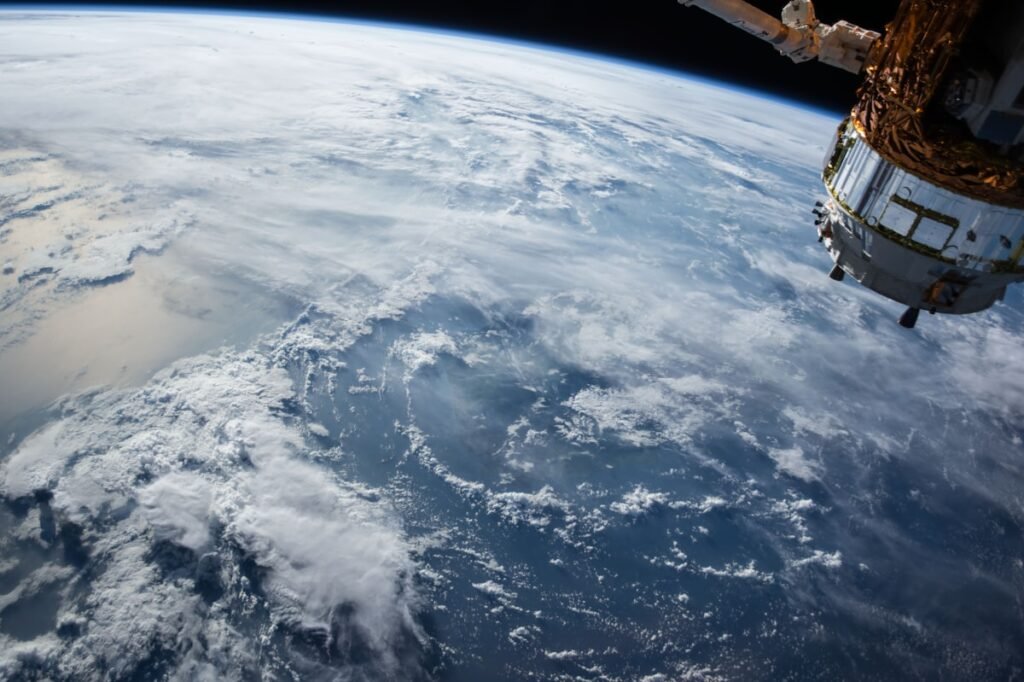

Circling roughly 400 kilometres above our heads, the International Space Station is the largest structure humans have ever placed in orbit. Travelling at about 28,000 kilometres per hour, it loops around the planet once every 90 minutes, meaning the crew on board witness around 16 sunrises and sunsets every single day.
A laboratory in the sky
The ISS is first and foremost a research laboratory. In the unique environment of microgravity, scientists study everything from how the human body adapts to spaceflight to how fluids, flames and crystals behave without the pull of gravity. These experiments help prepare us for longer journeys to the Moon and Mars, and have produced advances in medicine and materials science back on Earth.
An international partnership
As its name suggests, the station is a joint project, built and run by space agencies from the United States, Russia, Europe, Japan and Canada. Assembled piece by piece in orbit beginning in 1998, it stands as one of the most ambitious feats of international cooperation ever attempted, continuing even through periods of tension between partner nations on the ground.
Daily life among the stars
Living in space is a constant adjustment. Astronauts sleep strapped into sleeping bags so they do not float away, exercise around two hours a day to fight muscle and bone loss, and eat carefully packaged food. Water is precious and endlessly recycled, including moisture from the air and even from urine, turning yesterday’s waste into tomorrow’s drinking water.
The end of an era
The ISS will not last forever. It is expected to be retired around the end of this decade, after which it will be safely guided down to burn up over the ocean. In its place, a new generation of commercial space stations is already being designed, ensuring that humanity’s continuous presence in orbit will carry on.