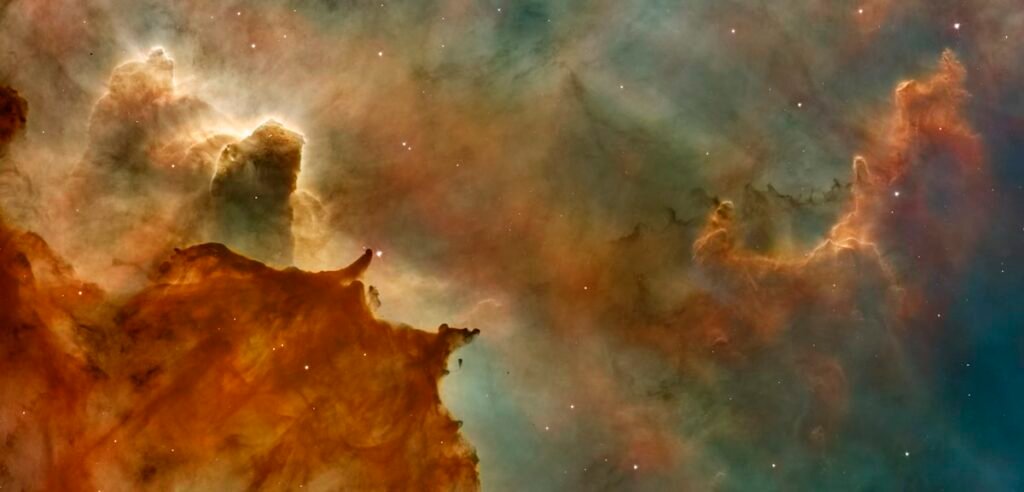

A supernova is one of the most powerful events in the universe, the explosive death of a star that can, for a few weeks, shine brighter than the billions of stars in its host galaxy combined. These rare events forge the heaviest elements and scatter them across space, making them essential to the story of how planets, and life, came to be.
Two ways to explode
There are two main types of supernova. The first happens when a massive star, many times heavier than the Sun, runs out of fuel. Without the outward push of fusion, its core collapses in a fraction of a second and the outer layers rebound in a colossal explosion. The second type occurs in binary systems, when a white dwarf pulls in too much material from a companion star and detonates.
The aftermath
What remains after a supernova depends on the original star. The core can be compressed into a neutron star, an object so dense that a teaspoon of its material would weigh billions of tonnes, or, for the most massive stars, into a black hole. The expanding cloud of debris forms a beautiful supernova remnant that glows for thousands of years.
Forging the elements
Supernovae are cosmic factories. The extreme temperatures and pressures of the explosion create heavy elements such as gold, silver and uranium, which are then flung into space. Almost every atom heavier than iron in the universe owes its existence to these stellar explosions.
Watching the sky for the next one
Supernovae are rare in any single galaxy, occurring perhaps once or twice a century. The last one clearly visible to the naked eye from Earth appeared in 1604. Astronomers watch the skies closely, knowing that the next nearby supernova will offer an extraordinary chance to study one of nature’s grandest spectacles up close.