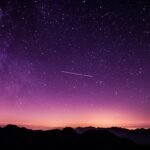

Few sights are as thrilling as a shooting star streaking silently across a dark sky. During a meteor shower, you might see dozens in a single hour. But despite the name, these brilliant streaks have nothing to do with stars. They are tiny pieces of cosmic debris meeting a fiery end in our atmosphere.
What you are actually seeing
A meteor is the flash of light produced when a small fragment of rock or dust, often no bigger than a grain of sand, slams into Earth’s atmosphere at tens of thousands of kilometres per hour. The friction heats the air around it until it glows, creating the bright streak we see. The piece itself usually burns up completely before reaching the ground.
Why showers happen
Meteor showers occur when Earth, on its yearly orbit, passes through a trail of debris left behind by a comet. As the comet rounds the Sun, it sheds dust and small particles along its path. When our planet ploughs through this stream, we see a sudden increase in meteors, all appearing to radiate from one point in the sky.
The best showers to watch
Several reliable showers occur each year. The Perseids in August are a summer favourite in the northern hemisphere, while the Geminids in December are often the richest of all. Each shower peaks on particular nights, when the number of meteors is at its highest, so it is worth checking the dates in advance.
How to make the most of it
Watching a meteor shower requires no equipment, just dark skies and patience. Get well away from city lights, lie back so you can take in as much sky as possible, and allow your eyes to adjust to the dark. The hours after midnight are usually best, and a night with little moonlight will reveal far more.